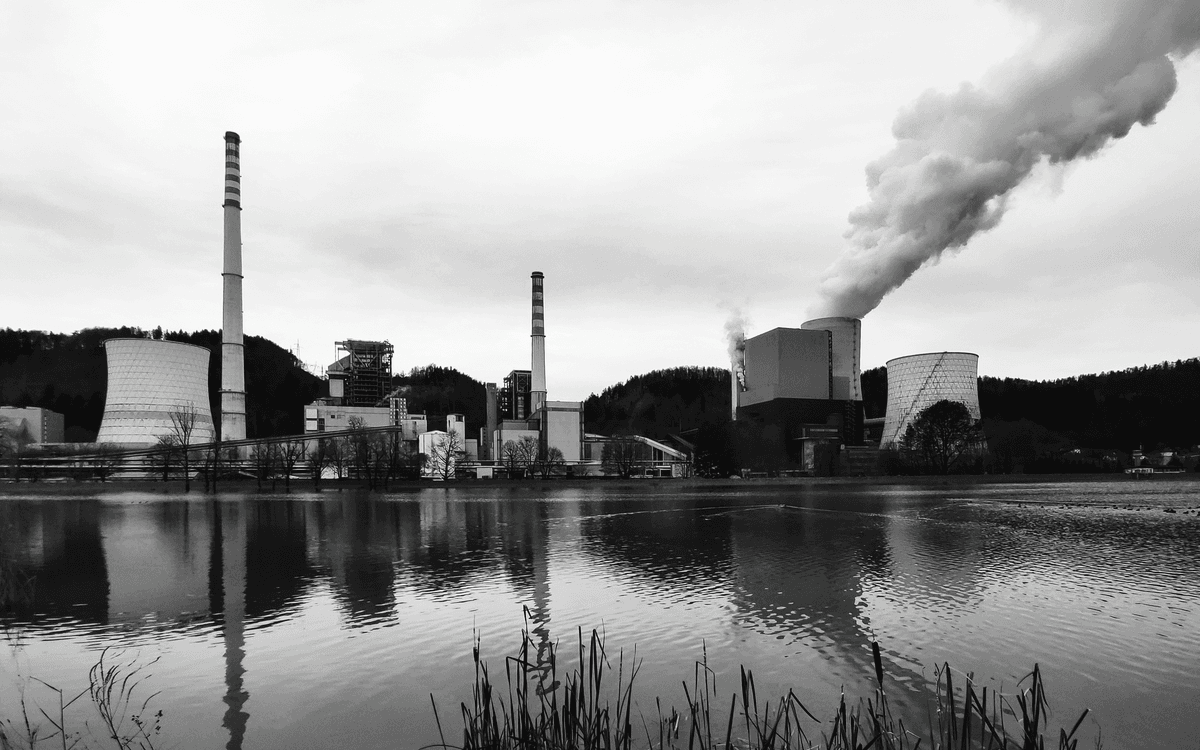
On 23 November 2026 the European Commission approved a Slovenian state aid scheme worth €1 billion for the closure of the Premogovnik Velenje coal mine, according to an announcement by beneficiary subsidiary HTZ Velenje. The support is intended not to reduce the costs of ongoing coal production but to finance exceptional costs arising from its termination. Extraction is scheduled to cease by the end of 2033, while work to abandon the mining facilities permanently is planned through June 2045.
The decision illustrates why a coal exit needs two different timetables. The first concerns energy production and ends on the final day of extraction. The second concerns the people, facilities and land for which responsibility continues long after that day. Approval of aid for the second task is neither a transfer of the entire amount from Brussels nor proof that each individual step has already been funded or carried out.
Key facts
- The Slovenian scheme approved on 23 November provides for €1 billion in aid to cover exceptional closure costs.
- The beneficiaries are Premogovnik Velenje and its three subsidiaries HTZ Velenje, Sipoteh and PLP.
- Coal extraction is scheduled to cease by 31 December 2033; the subsequent permanent closure phase runs from January 2034 through June 2045.
- In May, the Slovenian government estimated the overall closure programme at approximately €1.03 billion and made final adoption of the programmes conditional on completion of the EU procedure.
Why the aid is not a general coal subsidy
According to the beneficiary's account and reporting by The Brussels Times, the scheme was assessed under Article 4 of Council Decision 2010/787/EU. That provision distinguishes exceptional expenditure caused by the closure of coal production units from costs associated with ongoing production. Aid for the former category may be compatible with the internal market provided that actual payments do not exceed those costs.
The original Council decision also includes a separate provision addressing current production losses. This distinction matters for Velenje. Approval under Article 4 does not mean the state may cover every loss incurred in selling coal up to 2033. Expenditure on extracting and marketing fuel is treated differently from expenditure that arises specifically because operations are being brought to an end.
During a transition, the same company can incur both types of costs. One part of a mine may still produce coal while facilities elsewhere are being made safe and former mining areas rehabilitated. What matters is consequently not simply the recipient's identity but the purpose and allocation of each eligible expense. Article 6 provides for separate accounting. Article 5 also limits the combination of different public funding sources for the same costs.
The annex to the Council decision identifies liabilities that can arise when production ceases. These include, for example, exceptional expenditure on workers whose jobs disappear, retraining, additional underground safety work and justified rehabilitation of former mining land. The framework excludes costs resulting from non-compliance with environmental regulations. Approval of closure support therefore does not amount to a blanket exemption from environmental obligations.
Why the final closure extends twelve years beyond extraction
The schedule described by the beneficiary reflects the planned sequence of closure work. Through the end of 2033, areas where extraction has finished are to be closed progressively. From the beginning of 2034 until the middle of 2045, further work on the permanent abandonment of the facilities is planned. Slovenia's Ministry of Natural Resources and Spatial Planning likewise described long-term remediation and monitoring as elements of the programmes in May.
Ending extraction brings revenue from coal sales to a halt, but does not automatically remove the consequences of previous mining. Unlike a company simply ending production at a site, a mine operator must also account for underground structures and former mining areas after closure. Long-term financing therefore belongs within the planning for the exit itself. Work carried out after 2033 does not mean coal extraction will continue for a corresponding period.
The distinction matters for workers as well. The framework presented in May envisages gradual workforce reductions and measures to help workers change occupations. Within its approved purpose, the aid can cushion the social consequences of closure. But the billion-euro figure alone does not establish any individual's severance payment or guarantee a replacement job. National programmes and their implementation by the companies concerned determine those outcomes.
What the billion euros means for the public budget
On 22 May 2026 the responsible Slovenian ministry published the outcome of the previous day's government meeting. At that stage the government had agreed to use the closure programmes in the state aid notification process but had not yet finally adopted them. It estimated the financial framework through 2045 at approximately €1.03 billion. According to the ministry, this estimate was 6.4 percent below the initial figure when the law was adopted.
For the initial phase in 2026 and 2027, the earlier draft envisaged activities worth approximately €64 million. The state budget was expected to contribute €15.1 million in 2026 and €31.6 million in 2027. Premogovnik Velenje was to finance the remainder from its own resources. These figures describe an earlier planning stage, not verified accounts of actual expenditure. The projected start of initial closure work on 1 July was explicitly conditional on prior approval of the aid scheme. The decision now reported does not establish that this date was met.
The approved aid scheme and the total financial framework for closure must therefore be considered separately. The billion euros represents Slovenian state aid, not a new EU grant to the operator. The overall programme can also include the company's own resources. The amounts actually paid out in each financial year can be established only through national decisions and accounts of expenditure.
The next verifiable step is the final implementation of the Slovenian closure programmes after the state aid procedure. Assessment will then depend on the actual reduction of extraction, the financing of individual remediation measures and the social outcomes. The decision from Brussels establishes a legal basis under state aid rules for this process. It does not establish in advance that the closure will succeed.