The European Commission on 20 November 2026 gave Poland's final application for recovery funding a mostly positive but only preliminary assessment. It judged 76 of 77 agreed milestones and targets satisfactorily fulfilled. One target involving Baltic ports serving offshore wind farms has not cleared that test. The nearly €12.7 billion Poland requested is therefore not money already transferred.
The central question is why a nearly completed national recovery programme can encounter a dispute over a single condition without the whole payment automatically being cancelled. The EU's Recovery and Resilience Facility, or RRF, links funding to documented outcomes rather than simply reimbursing invoices or political promises. Poland calls the application submitted on 30 September its ninth and final request. Commission documents sometimes count the payment rounds differently. The material facts are the specific application and its 77 conditions.
Key facts
- Poland's final claim amounts to nearly €12.7 billion, with around €6.8 billion in grants and €5.9 billion in loans, according to its funds ministry.
- The Commission's preliminary finding is positive for 76 of 77 conditions; one offshore-wind port infrastructure target is still disputed.
- Final payment approval and any proportionate reduction remain outstanding. A preliminary favourable assessment does not itself transfer money.
- An earlier €7.9 billion instalment was actually paid to Poland on 1 October. That was a separate request and completed payment procedure.
Why Baltic ports became the disputed target
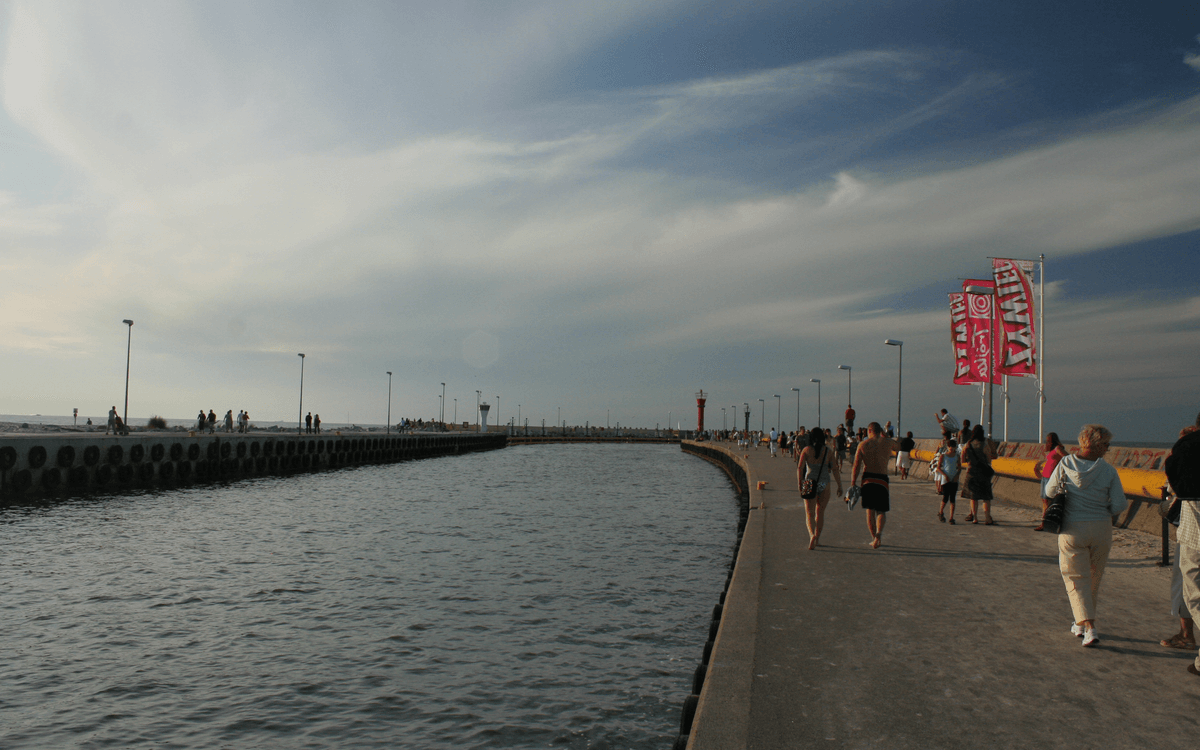
The unresolved commitment concerns facilities in Łeba, Ustka and Darłowo intended to support construction and servicing of offshore wind farms in the Baltic. Such industrial activity requires suitable quays, storage, access routes and equipment-handling capacity. But whether these facilities would be useful for Poland's energy transition is not the formal test. The EU must determine whether the specific agreed milestone was reached on time and supported by sufficient evidence.
The Commission's preliminary assessment says this condition was not satisfactorily met. Polish Radio's Brussels correspondent, by contrast, reported an explanation that the works had been completed but could not be assessed by EU officials in time. Those statements answer different questions. One is the Commission's formal finding on performance; the other is a reported account of physical progress and the timing of verification. The available documents do not establish independently the construction status of every relevant port facility.
This is what makes the condition instructive. Even a nationally important investment programme cannot substitute a general story of progress for the evidence required by a precise payment condition. A port might be useful, work may be underway, and public money may already have been committed, while the EU's performance test remains unsettled.
A negative finding on one target, however, does not necessarily invalidate the entire claim. The procedure allows a proportionate reduction tied to the unfulfilled obligation, while the satisfactorily assessed portion can continue toward approval. The size of any reduction has not been finally determined. A figure of around PLN 100 million mentioned by a Polish correspondent for the disputed element should be described as a reported estimate, not as a legally final EU deduction.
The next stage includes the member states' Economic and Financial Committee, which has four weeks to deliver an opinion. Poland can submit observations on a negative part of the assessment under the relevant process; the publicly available procedural summary describes a two-month opportunity. Poland's funds ministry expects a formal decision and a transfer during December. That remains a forecast at the time of publication, not evidence of a payment already executed.
What October's completed transfer tells us
The distinction becomes tangible when compared with an earlier event. On 1 October, the Commission announced that €7.9 billion from a previous request had actually been disbursed to Poland. For that instalment, the relevant reforms and investments had been assessed, the required decisions taken and the funds transferred. Examples included electricity-grid improvements and the purchase of 88 trams for Wrocław, Poznań and Kraków.
Following that payment, the Commission said Poland had received 77% of its total recovery allocation of approximately €54.72 billion. The overall envelope comprises around €25.28 billion in grants and €29.44 billion in loans. Crucially, the 77% figure describes Poland's position after the October payment. It does not mean that 77% of the November application has been paid already. The dates and payment stages cannot be interchanged.
Poland's funds ministry said on 20 November that about PLN 180 billion had already reached the country and more than 1.145 million project contracts had been signed. Those are government-reported cumulative programme figures. A contract awarded to a project recipient is not a new transfer from the European Commission. Approvals, signed contracts, actual construction and cash disbursements are related but distinct accounting categories.
The ministry listed childcare provision, hospital upgrades, railway equipment, power grids, energy storage, broadband access and cybersecurity as beneficiaries. This breadth explains why the final request matters nationally. It cannot in itself prove that the disputed offshore-port target was satisfied in the precise manner required. Government claims about economic growth associated with the programme are likewise official assessments, not an independent impact measurement generated by the Commission's latest examination.
The three deadlines that determine what happens next
Outstanding milestones and targets had to be completed by 31 August 2026. Final payment applications were due by 30 September. Payments from the temporary recovery facility are to be completed by the end of December 2026. These are three separate steps: delivering results, filing for funding and approving and making the transfer.
If a project was only started after the performance deadline, merely submitting the request on time would not make its construction timely. A different problem arises if the work was finished within the deadline but its documentary proof remained disputed. In that case the relevant questions involve evidence, contractual criteria and the Commission's legal assessment. Whether that second explanation accurately describes all the port works is itself contested.
Two outcomes must now be monitored separately. First, the positively assessed majority of the final request must complete the remaining approval process. Second, the Commission must resolve the offshore-port condition and any proportionate withholding. On 20 November, a headline saying Brussels had already paid €12.7 billion would therefore be premature. The RRF pays against verified milestones, not merely the submission of the final national application.