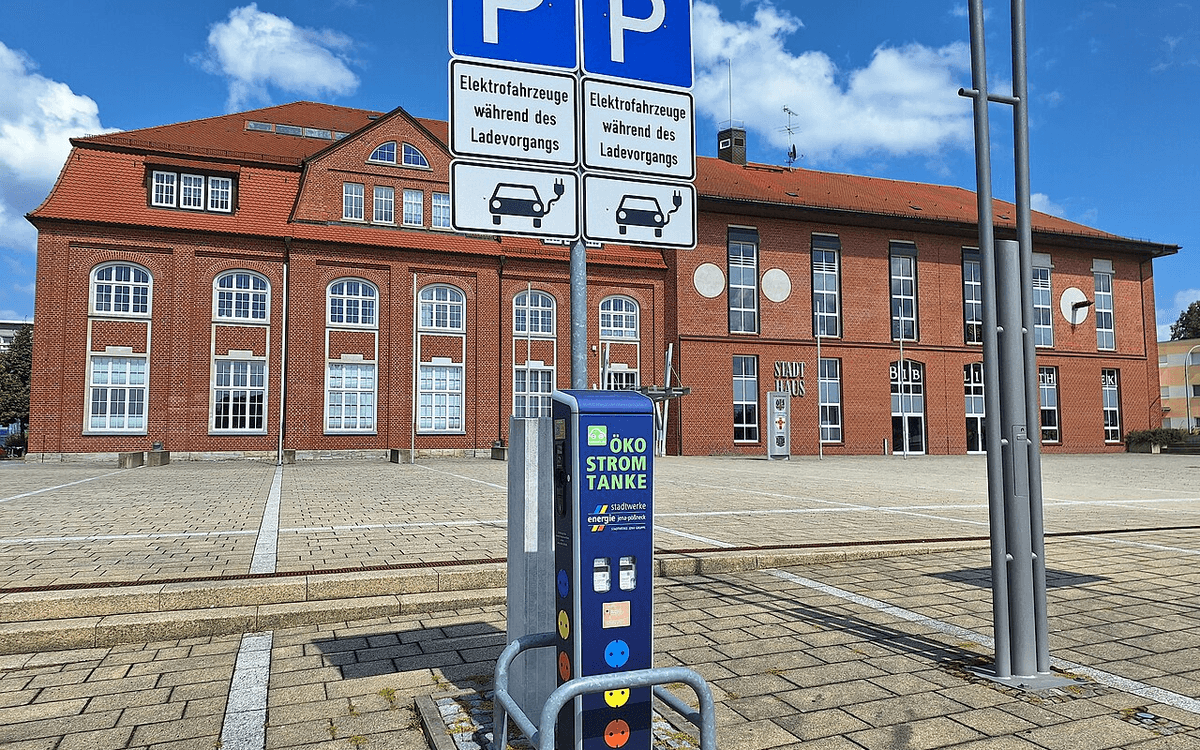
Germany’s Bundestag voted on November 5, 2026, to give municipalities more room to change parking charges and access rules for electric vehicles. Under the legislation, cities could waive fees for resident parking permits, the federal government says. The current legal framework expires at the end of the year. The Bundesrat, which represents Germany’s states, still has to approve the reform. Drivers would see additional benefits where the relevant authorities choose to introduce them.
Key facts
- Germany’s existing Electric Mobility Act already allows reserved parking spaces, fee reductions and exceptions to some road restrictions. It is due to expire on December 31, 2026.
- The bill approved by the Bundestag would extend the framework and cover more vehicle classes, including electric buses and heavy commercial vehicles.
- Municipalities could lower or waive resident parking fees. An authority would have to introduce a concession before a driver could claim it.
What can cities already offer electric drivers?
Germany’s current Electric Mobility Act, dating to 2015, separates eligibility for preferential treatment from the rules that apply on a particular street. It covers vehicles including battery-electric cars, fuel-cell vehicles and qualifying plug-in hybrids. The measures it authorizes include preferential parking on public roads, access to special lanes and exceptions to entry restrictions. Road safety and the free flow of traffic must be maintained. Vehicles generally need a clearly visible designation to receive benefits under the act.
Existing and former parking arrangements illustrate how widely the use of those powers can vary. Public broadcasters Tagesschau and SWR reported on Bavaria and two cities in Rhineland-Palatinate. The examples cover different kinds of fee relief and show why the federal law alone cannot tell a driver what they will pay at any particular parking space.
| Area | Electric-vehicle parking rule | Status in the November 5, 2026 report |
|---|---|---|
| Bavaria | Up to three hours free in public parking spaces with an electric-vehicle plate | Current concession |
| Ludwigshafen am Rhein | Free parking in city-managed spaces ended after two years | Standard fees again since January 1, 2025 |
| Kaiserslautern | General exemption ended in 2022; the city says three hours remain free while charging if a parking disc is displayed | Concession limited to charging |
Local authorities weigh factors other than a vehicle’s power source. Kaiserslautern told SWR that it opposed a discount for resident parking because providing and maintaining spaces costs the same regardless of how the vehicle is powered. For a driver, a charging-space fee waiver and a cheaper resident permit serve different purposes. One applies during a charging session. The other changes the cost of parking regularly in a residential area.
Ludwigshafen’s city administration described its fee waiver as transitional. It advised the city council to let the exemption end because officials considered the extra incentive to buy an electric car unnecessary. The same federal law gave the city room to introduce the concession and then return to its general parking fees.
What would the bill change?
The federal government wants a lasting legal framework while retaining time limits on some concessions. Tagesschau reported that several local options, including reserved parking spaces and special access rights, are envisaged through the end of 2035. For resident parking, municipalities could reduce or waive the fee for a permit. The bill therefore expands the choices authorities can make. Local officials would still decide whether to use the new power and where it would apply.
Parking at public chargers is the subject of a separate proposed change. According to Tagesschau, the Federal Ministry of Transport wants a provision in the road traffic regulations under which visible use of the charger would be enough to park in a designated charging space. Plugging in would show that the vehicle was charging even if it lacked a German electric-vehicle plate. That would be relevant to visitors driving vehicles registered abroad. Until the provision is made, the signs at each site remain the guide. A space reserved for charging serves a different purpose from a space reserved for electric vehicles regardless of whether they are plugged in.
Which operators could benefit from the wider scope?
The federal government identifies buses and heavy commercial vehicles as important additions. The current act already includes certain commercial vehicles. These include category N2 vehicles where a German category B licence permits the driver to operate them. The expansion would therefore reach operators whose vehicles fall outside that limited provision. For a delivery company, an exemption from a local access restriction could have a different practical value from a reduced parking charge for a private car. The relevant concession would depend on the route, the kind of vehicle and the local rule.
For plug-in hybrids, the model’s specifications matter under the current act. It requires carbon dioxide emissions of no more than 50 grams per kilometer or a range of at least 40 kilometers on electric power alone. Tagesschau reported that the bill raises the electric range requirement. The two criteria are alternatives. A vehicle can therefore qualify under the emissions criterion even if it falls short of the range threshold.
Germany’s freight forwarding and logistics association told Tagesschau it welcomed the new options in principle. It said their value for businesses would depend on municipalities actually easing conditions for electric delivery vehicles. Operators also need reliable charging and vehicles that are economical to run. The Association of German Cities told SWR that cities had positive experience with dedicated parking spaces while opening bus lanes to electric cars had remained contentious. The two measures present different choices for local authorities, even when they use the same federal framework.
The Bundesrat is the next legislative step. The federal government also has to spell out the proposed charging-space provision. For drivers and fleet operators, the practical effect will become clear when the relevant authorities specify which fees, parking spaces and access restrictions they are changing.