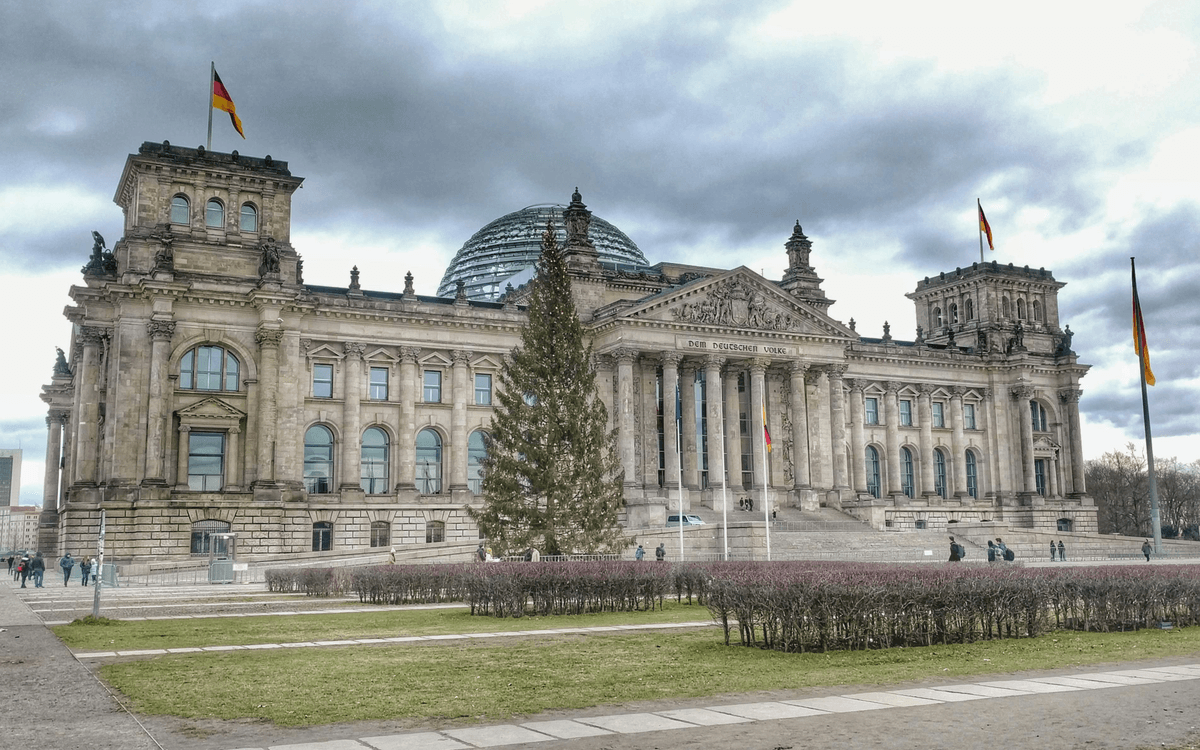
Germany's Bundestag budget committee has approved a proposed €203.29 billion allocation for the Federal Ministry of Labour and Social Affairs in 2027. In an update published on 16 November 2026, the parliamentary administration said the figure was €1.82 billion above the government's draft. One of the largest changes is a planned federal loan to the Federal Employment Agency (BA), increased by €3 billion to €8.2 billion. This is a committee decision, not the final adoption of the federal budget into law.
The change reflects a specific funding problem. On 13 November, the BA presented its own 2027 budget with €50.8 billion in revenue and €58.8 billion in expenditure. After accounting for certain levy-financed schemes, it expects a funding shortfall of €8.2 billion to be covered by federal loans. In the ministry's budget, that support is recorded as a loan rather than an ordinary additional grant.
Key facts
- 2027 labour budget: The committee approved €203.29 billion, €1.82 billion more than the government draft and €5.94 billion above the 2026 budget allocation.
- BA loan: The planned multi-year federal loan was increased from €5.2 billion to €8.2 billion.
- Agency finances: The BA forecasts an €8.2 billion deficit for 2027 and says outstanding federal loans could total up to €18.7 billion by the end of that year.
- Legal status: The budget committee has reached its decision; final parliamentary passage of the federal budget remains ahead.
How the federal loan changes the picture
The ministry's 2026 budget allocation was €197.34 billion. The committee's 2027 figure is approximately three per cent higher. Its largest component, covering pension insurance and basic support in old age or reduced earning capacity, is roughly €143.4 billion, around €3.3 billion more than in 2026.
Not every spending item increased. In the pensions chapter, the committee cut the additional federal subsidy to the general pension-insurance system by €1.97 billion compared with the government's proposal, leaving €31.99 billion. This illustrates why a larger overall ministry budget does not necessarily mean every programme receives additional funding.
For jobseekers' basic cash support, the committee now provides €26.64 billion, €1.06 billion less than the draft. It also reduced the proposed federal contribution to housing and heating support by €245 million to €12.9 billion. These are proposed budget allocations, not amounts already paid or a decision setting any individual's benefit entitlement.
The BA loan has a particular fiscal classification. According to the Bundestag, it is booked as a financial transaction and an investment for budget purposes, so it falls outside the ordinary debt-brake calculation. That accounting treatment does not establish whether the agency will be able to repay the full loan later.
What the employment agency expects
The BA projects €42.4 billion in contribution revenue for 2027. Its planned unemployment-benefit spending is €30.8 billion and its vocational-training funding is €4.2 billion. At the same time, it plans €500 million in active savings and reduced administrative costs. For 2026, it previously forecast a deficit of up to €9 billion, also to be financed by federal loans.
The agency attributes the pressure to high unemployment and economic weakness. Representatives of its governing board have called for debt relief or more durable federal support. That is their policy position, not a government decision to forgive the loans.
The two budgets must not be added together. The ministry's federal budget and the BA's contribution-funded accounts cover different responsibilities, but the federal loan links them. One ledger records planned federal financing; the other records the unemployment-insurance system's expected need.
The next questions are whether the final budget retains the loan increase and whether 2027 unemployment and contribution revenue match the forecasts. Only later will the actual financing requirement be known.