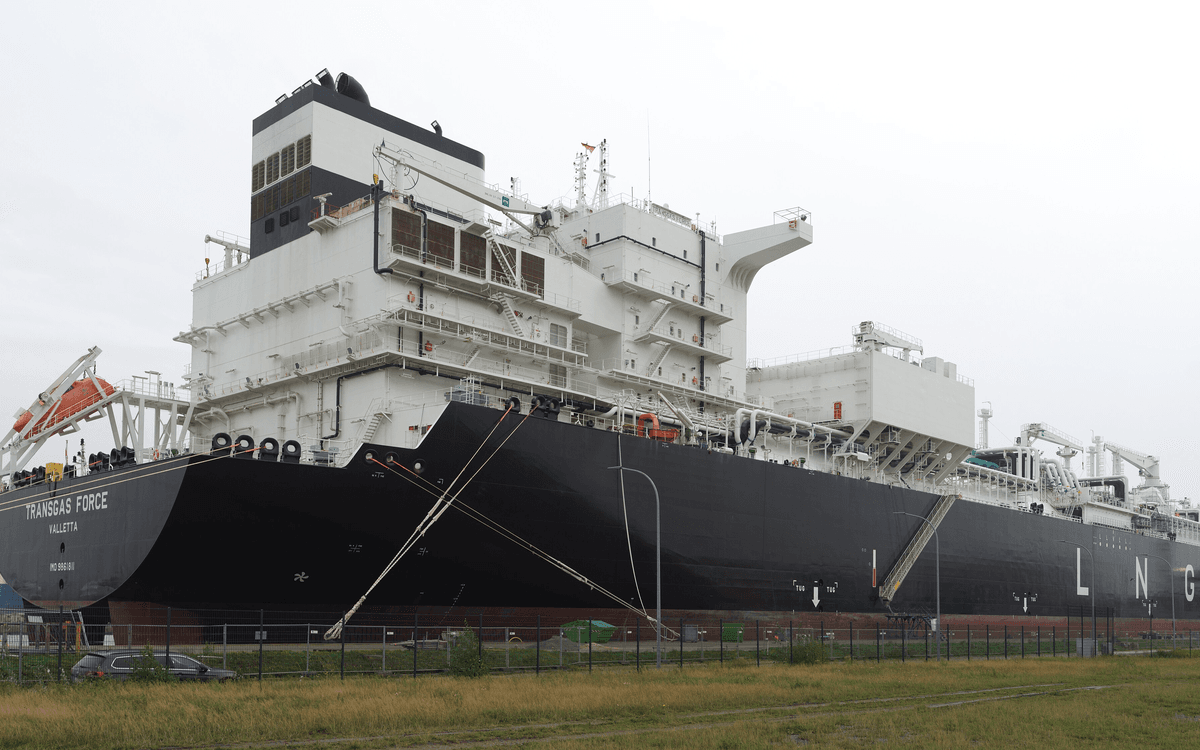
EU governments want to give importers of crude oil, natural gas and coal an extra year to show that suppliers are subject to equivalent methane checks. The Council of the European Union set its negotiating position on changes to the methane regulation on 6 November 2026. The Council mandate registered by the Austrian Parliament concerns talks with the European Parliament. Reuters, which saw the text, reported that governments support moving the first step from 1 January 2027 to 1 January 2028. The Council and Parliament still need to agree on a change to the law.
Key facts
- The delay concerns evidence for imports of crude oil, natural gas and coal produced outside the EU.
- The evidence required depends on the supply contract date and the checks used at the producer.
- The Commission draft also postpones reporting on methane intensity and the later requirement to show compliance with maximum values.
- Parliament wants longer deadlines and would exclude certain shipments subject to EU import restrictions from the delay.
What would an importer have to show?
The methane regulation has been in force since August 2024. Since May 2025, importers have had to give national authorities information about methane emissions from fossil fuels they place on the EU market. The European Commission’s draft amendment describes that information duty as the first stage. It would continue under the proposed delay.
The next stage concerns the quality of the information at the producer. For supply contracts concluded or renewed from 4 August 2024, importers have to demonstrate that producers are subject to equivalent monitoring, reporting and verification. The benchmark is the set of requirements applicable to producers in the EU. For an importer, that means tracing the information behind a shipment back to the production stage. A record of how much fuel was delivered says nothing about whether methane emissions at the producer are monitored and checked to that standard.
The Commission draft treats older contracts differently. Importers are to make reasonable efforts to require equivalent checks at the producer and report the outcome. If they are unsuccessful, they have to explain why and set out what they did. The evidence for older deals therefore differs from the proof required for new or renewed contracts. An extension changes the dates by which companies must present the documents relevant to each group of contracts.
How do the proposed dates differ?
The Commission draft separates the start of the requirement from the date of the first report. Under its proposal, the requirement for equivalent checks would apply from January 2028. The first report to the relevant national authority would be due by 31 May 2029 and cover the previous calendar year’s supply. The European Parliament wants to give importers until 31 May 2031 to submit that first report.
| Requirement | Existing timetable as described by the Commission | Commission draft |
|---|---|---|
| Equivalent checks for new or renewed import contracts | Applies from 1 January 2027 | Applies from 1 January 2028 |
| First methane-intensity report | 5 August 2028 | 5 August 2029 |
| First demonstration of compliance with maximum methane-intensity values | 5 August 2030 | 5 August 2031 |
The final two stages apply to importers and EU producers. An intensity report describes methane emissions from the production of fuels placed on the EU market using a prescribed calculation method. The later obligation requires evidence that the result is below the relevant maximum value. Those values are to be set separately. The draft ties the demonstration of compliance to contracts concluded or renewed after 5 August 2030. Gathering figures for a report and demonstrating that those figures meet a limit are two different tasks.
What remains open in negotiations?
On 22 October, members of the European Parliament adopted amendments by 341 votes to 225, with six abstentions, and sent the matter back to the responsible committee for negotiations. They want the first methane-intensity report due on 5 August 2031. Their text also gives EU oil and gas operators more time for certain reports. For assets the operators run themselves, Parliament would make verified reports combining measurements at emission sources and at the site due in February 2030.
Parliament also wants the delay to exclude fuels from third countries whose shipments are already prohibited or restricted under applicable EU measures. Under its proposal, importers would declare those volumes separately even in mixed cargoes. The Commission would publish and update a list of the countries concerned.
The Commission says disruption in Middle Eastern energy markets has increased supply risks. It cites concerns from importers that they may be unable at short notice to secure enough fuel with the necessary evidence. The regulation sets out requirements for checks and documentation. The supply concern raised in the proposal is whether enough shipments can be documented to the required standard in time.
Reuters reported that the Council would also require an assessment of whether the conditions for implementation are in place. The Commission would make an initial assessment by 30 September 2027, with a further assessment by 30 June 2028 potentially leading to another extension. The Council and Parliament will now have to reconcile their positions. For importers, the immediate question is whether the change can take effect before the current 1 January 2027 start date.