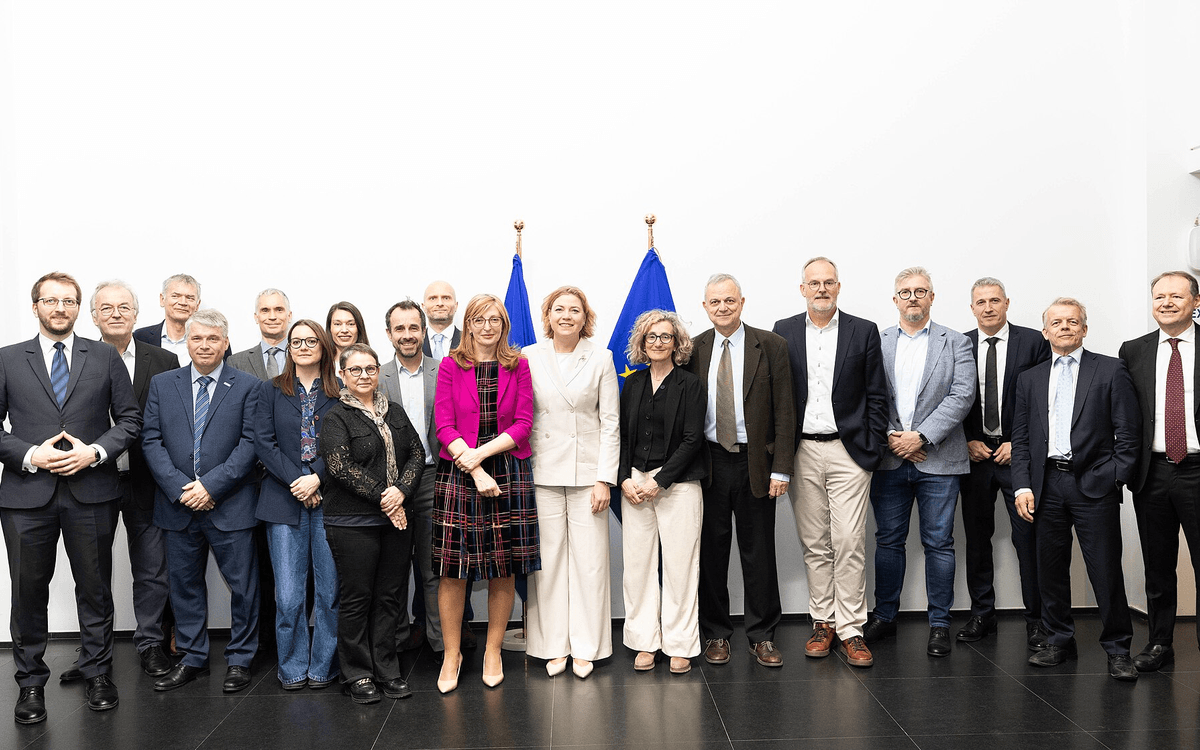
The European Union and Australia signed an agreement in Brussels on 12 November 2026 giving Australian researchers a more direct route into part of Horizon Europe. The European Commission's confirmation names research commissioner Ekaterina Zaharieva and Australian science minister Tim Ayres as the signatories. Negotiations finished in June; participation under a planned transitional framework is expected from 2027. The signed agreement is not evidence that any particular research grant has already been awarded.
Key facts
- The proposed association covers Pillar II of Horizon Europe, with a programme budget of €52.4 billion, rather than every funding instrument.
- Negotiations concluded on 9 June 2026, and the agreement was signed in Brussels on 12 November.
- From January 2027, transitional rules are intended to treat Australian participants as eligible entities from an associated country for Pillar II.
- The Commission had recorded Australian participation in 239 projects by June. Those projects predate the new framework.
How project eligibility would change
Horizon Europe is the EU's major research and innovation programme for 2021 to 2027. Its overall €93.5 billion budget is distinct from the smaller Pillar II allocation. The Australian association is designed to cover collaborative research addressing societal and industrial challenges, including health, digital technology, industry, space, climate, energy and mobility. It does not automatically open every other part of the programme to Australian applicants.
Under the previous arrangements, Australian institutions could take part in many projects as third-country partners. According to the Commission's June explanation, they commonly needed to fund their own activities or meet narrow exceptions to obtain EU support. The transitional approach planned for January 2027 would allow Australian institutions to seek Pillar II funding on the terms available to participants from associated countries. It would also allow them to coordinate international research consortia under the applicable call conditions.
That could make an Australian laboratory a more straightforward partner for a German university or European company applying for a collaborative grant. It does not mean that applications are exempt from competitive review. Project quality, eligibility conditions, submission deadlines and the rules of each call will still govern award decisions. The distinction between permission to apply and actual funding is central to the agreement's practical meaning.
The sequence from March to November
On 24 March, the Australian Prime Minister's office announced the intention to negotiate participation from 2027. It pointed to research in health, climate, energy and advanced computing, and support from Australia's university sector. That was a political commitment to pursue an agreement, not confirmation that association had already taken effect.
On 9 June, the Commission said negotiations had concluded successfully. Its accompanying data counted 239 Horizon Europe projects involving Australian organisations and a 24.39% historical success rate for individual applications from Australia. Both figures describe earlier participation. Neither is a forecast of future selection rates, nor evidence that additional grants have been delivered under the anticipated agreement.
The Commission confirmed the 12 November Brussels signature and the specific part of Horizon Europe involved. The operational change is separately expected from January 2027 under transitional rules. The sequence matters: concluding negotiations, signing the agreement, eligibility under programme rules and an eventual grant payment are distinct stages with separate evidence.
What European research organisations can expect
Expanding eligibility could reduce administrative and financing obstacles for cross-border projects. European researchers might be better able to bring Australian facilities and technical expertise into research teams, especially for climate modelling, energy technologies, health research or complex shared infrastructure. These are potential opportunities arising from the proposed rules, not measured achievements of the agreement.
The agreement also sits within a longer partnership between Australia and the EU. The March discussions placed research alongside trade and security, although those arrangements have separate legal processes. Association does not make Australia an EU member or replace each project's formal assessment.
There is no supported estimate yet of how many extra consortia will form, how much money Australian organisations will ultimately receive or what economic return the collaboration will produce. Those questions can be answered only from future calls, funding decisions and implementation reports. The next verifiable milestones are publication of the detailed transitional conditions, the first eligible 2027 calls and completion of the remaining formal association steps.