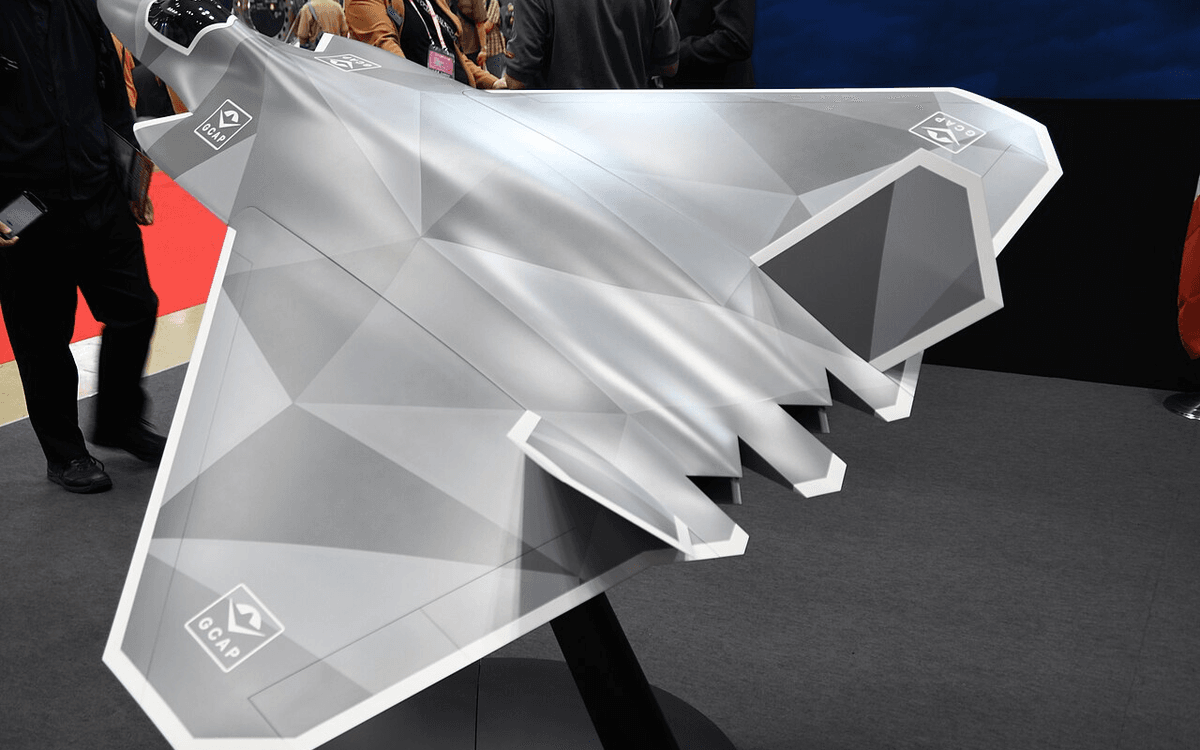
Italy's defence ministry said on 14 November 2026 that it supports Germany joining the Global Combat Air Programme, rejecting reports that Rome sought to keep Berlin out of the British-Italian-Japanese fighter project. Italy proposed bringing Germany in initially as an observer so that information can be shared ahead of possible full membership. Neither observer status nor full accession has been announced as an agreed decision for Germany.
The statement followed a Financial Times account suggesting Italy had resisted equal German participation because of concerns over the programme's timetable and industrial arrangements. Rome called that portrayal misleading. Reuters and Sky TG24 reported the ministry's response on Saturday. Political support for a future German role and agreement on an equal industrial partnership are not the same thing.
What an observer could do, and what remains undecided
GCAP is the joint programme of the United Kingdom, Italy and Japan intended to deliver a next-generation combat aircraft by 2035. Its industrial work involves BAE Systems, Leonardo and Japanese aerospace partners. Bringing in another substantial European country could add money and engineering capacity, but it could also require negotiations over design responsibilities, intellectual property, governance and how development work is allocated.
Italy presented observer participation as a way to start sharing information immediately without reopening every part of the project's existing arrangements at once. Observer status does not, by itself, confer voting rights over the aircraft design or a guaranteed share of manufacturing. Those issues would require separate agreement among the programme's partners.
The three countries have already used the approach with another prospective partner. On 21 July 2026, their defence ministers welcomed Canada as an observer in a joint statement published by Japan's Ministry of Defense. That agreement envisaged Canadian insight into governance, capabilities, industrial arrangements and security requirements. It is a real precedent for the status Italy is discussing, but it is not an announcement that Germany has been admitted on Canada's terms.
There is also a documented recent point of contact among the three existing governments. Japan's defence ministry reported a virtual meeting on 11 November involving the Japanese, British and Italian defence ministers. Its 12 November statement recorded renewed commitment to trilateral GCAP cooperation, but no formal German accession decision. Italy later said its position on Germany had also been raised in the latest trilateral discussion.
Why Germany wants more than access to briefings
Germany's decision is not simply about obtaining a seat in meetings. A full partner would need clarity over the costs it bears, the engineering work available to domestic manufacturers, its influence over technical decisions and the opportunities its defence industry gains from a major future aircraft programme. An observer arrangement may provide the information needed to evaluate those terms, but does not settle them.
For London, Rome and Tokyo, the schedule is a major constraint. The 2035 objective has anchored the political case for GCAP. Adding a fourth full partner could eventually widen the financial base, yet changing governance and work allocation partway through development can also take time. The benefits and risks are prospective, not an outcome demonstrated by Saturday's statement.
The negotiations also have a bilateral foundation. A German government-supported account of the 2 November British-German defence ministerial council said London was open to German involvement, subject to the agreement of all three GCAP partners. Germany and Britain discussed other military-industrial projects at that meeting. That openness was not a binding offer by GCAP's three governments.
The apparent contradiction between the Financial Times reporting and Italy's rebuttal reflects different questions. The report described resistance to Germany entering immediately on equal terms. Rome said it had always been willing to welcome German participation, and that observer access could accelerate a subsequent move to full membership. Germany can be welcomed in principle without the partners having agreed the workshare, financing or voting rights.
Key facts
- Britain, Italy and Japan are the three existing GCAP partner countries; the programme targets a new combat aircraft by 2035.
- Italy said on 14 November that it supports German involvement and had proposed observer participation as an initial step.
- Canada was formally welcomed as an observer in July 2026, but Germany has not been granted the same status in the reviewed announcements.
- Japan's account of the 11 November trilateral ministers' meeting contains no decision to admit Germany.
The next test is an agreement, not a statement
The participating governments would need to clarify what information Germany could obtain as an observer and what conditions might permit later full membership. Work allocation, programme management, security requirements and financial commitments would then be the difficult negotiations. No binding German accession date or industrial allocation was established by the documents examined.
Italy's new public position offers a path for talks, not a completed expansion of the fighter programme.