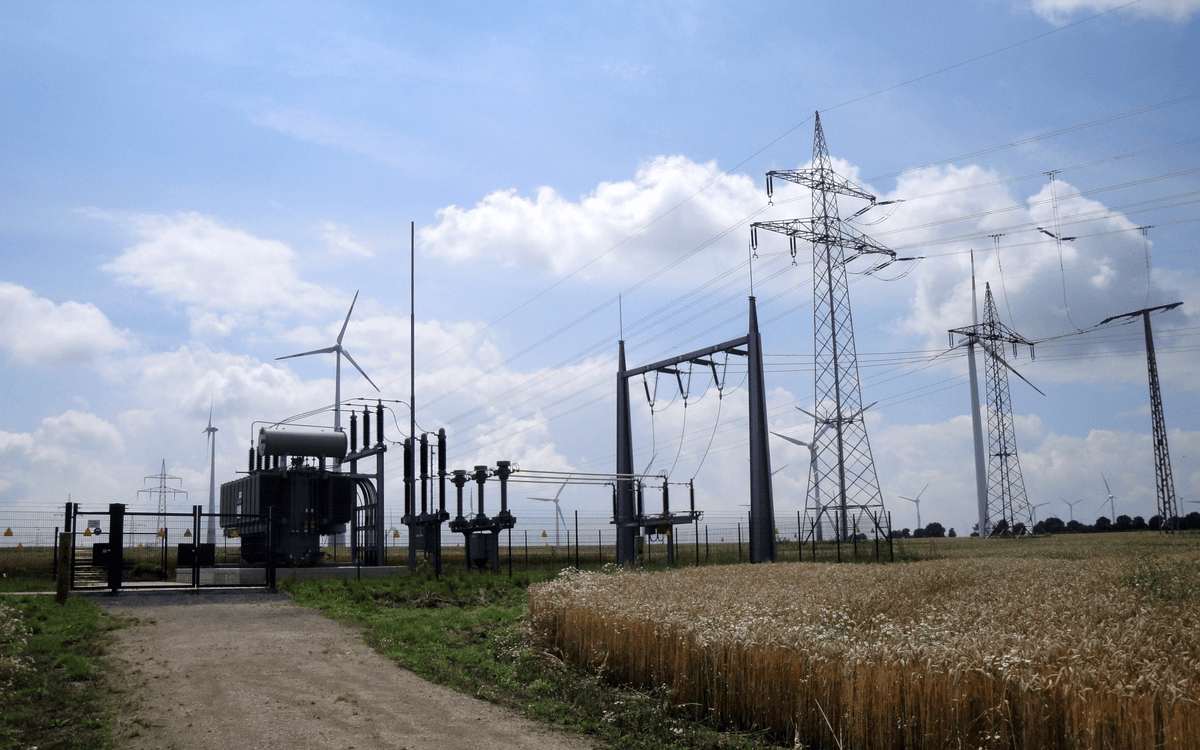
Germany's federal government has challenged major parts of a Bundesrat bill that would introduce new criminal penalties for trespassing at critical infrastructure sites and for certain unlawful drone overflights. Its opinion was published with Bundestag document 21/9277, dated 18 November 2026, and summarised by parliament on 20 November. The proposal has reached the Bundestag; it has not become law.
The dispute is not simply over punishment levels. It asks whether existing trespass and aviation rules already cover the danger or whether electricity, transport and other essential services need a distinct offence in Germany's Criminal Code.
Key facts
- The Bundesrat adopted its legislative proposal on 16 October. The Bundestag document carrying the government response is dated 18 November.
- Proposed Section 123a of the Criminal Code would permit up to two years in prison or a fine for unlawfully entering or remaining within relevant critical infrastructure sites.
- Unlawful drone flights over the sites would carry up to one year or a fine; acts intended to prepare sabotage would carry between three months and five years.
- The federal government says existing rules largely address physical trespass and suggests assessing any additional drone penalties under aviation law instead.
Why the two levels of government disagree
The Bundesrat argues that conduct preceding an attack can endanger public safety even without damage to equipment. Its proposed offence is designed to close what it sees as a gap between regulatory penalties and conventional crimes. It would cover prohibited entry, refusal to leave and unauthorised use of an unmanned aircraft in protected airspace, subject to the elements defined in the draft.
The proposed protection applies to installations important for providing critical services. The explanatory text says the thresholds used to designate critical installations under the broader critical-infrastructure framework would not always determine the reach of this new crime. That could bring relevant smaller facilities within scope. How clearly a protected installation and its airspace can be identified would therefore matter to site operators, police and lawful drone users.
The government's response accepts only part of that case. It says existing criminal trespass provisions and other offences already provide an adequate response to most culpable physical incursions. It is more open to examining criminal penalties for unlawful drone flights, but says the appropriate location would be aviation legislation, not the Criminal Code. It has not promised to enact such an offence or specified a timetable.
Why the proposed drone offence would not start from zero
German law already restricts drone operations in specified geographical areas. Section 21h of the Aviation Ordinance describes conditions for flights around industrial installations and central electricity generation and distribution sites. In the specified situations, operations over or within 100 metres of the boundary depend on express permission from the competent authority or operator. Different categories and locations can have additional routes to lawful operation; the rule is not one universal ban on every flight near infrastructure.
The Bundesrat bill would principally change the criminal consequences of qualifying violations. Unlawful operations can already have legal consequences, but the proposed imprisonment range is not a penalty currently in force simply because a drone passes near a substation. That distinction matters when interpreting reports about new 'drone crimes'.
The heavier proposed penalty would apply where conduct is committed with the intent to prepare sabotage or an attack. The relevant intent would need to be established in a prosecution. An unauthorised overflight alone would not automatically satisfy that aggravated provision.
There is also a procedural distinction between the criminal bill and other political initiatives. The specialist portal Luftwacht reported that on 20 November the Bundesrat adopted a separate resolution calling for stronger critical-infrastructure protection. Such a resolution is a request for government action, not an enactment of a new criminal prohibition.
Parliamentary consideration of document 21/9277 now determines whether the proposal survives intact, is rewritten to focus on aviation law or fails to advance. Until a legislative change is adopted and takes effect, the existing aviation and criminal rules remain the applicable framework.