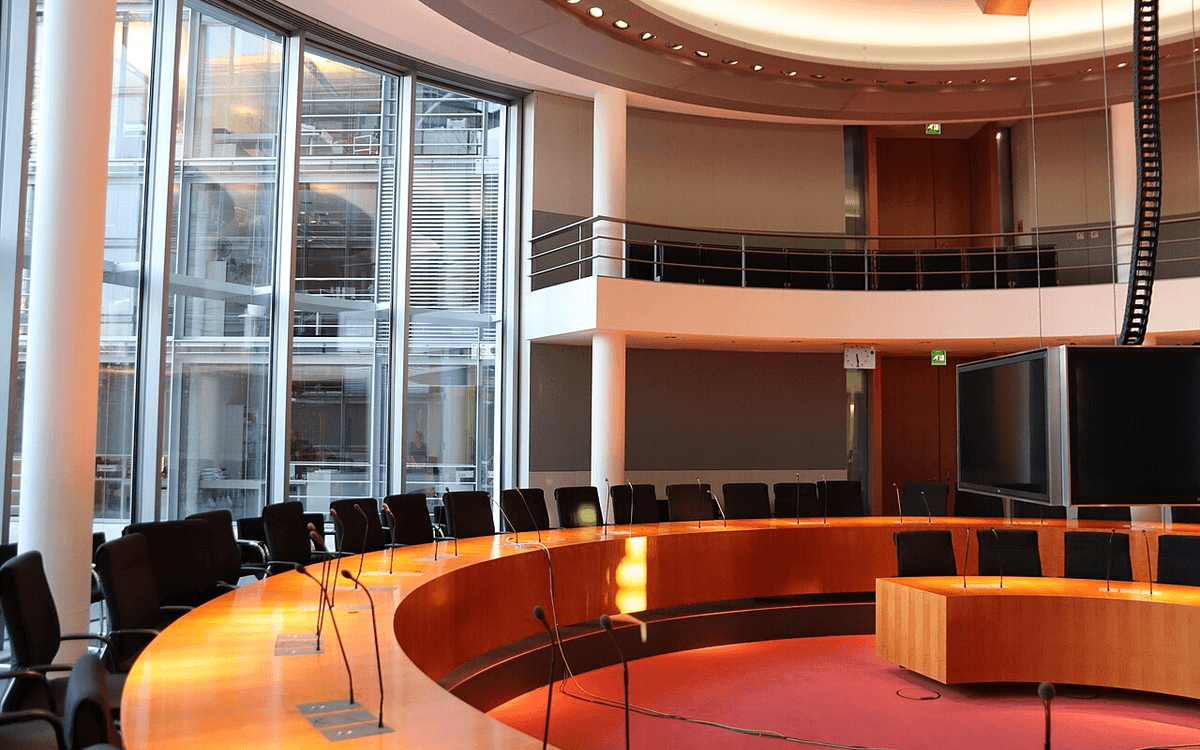
Germany's Bundestag transport committee examined plans to allow the federal motorway company, Autobahn GmbH, to borrow money at a public hearing on 23 November. Experts disagreed over whether the reform would comply with the federal debt brake. Representatives of the construction industry and the federal audit office also raised concerns about the proposed funding model, although their arguments differed.
The dispute has immediate implications for next year's infrastructure planning. The budget committee has already proposed reducing the investment appropriation for Autobahn GmbH in the 2027 federal budget. Under the government's plans, the new borrowing arrangements would replace part of the existing budget funding. The legislation has not yet been enacted.
Investment appropriation falls before borrowing decision
The federally owned company is currently financed through the federal budget. Bill 21/8868 would also give it access to the capital market. It could then take out loans or issue bonds. To service this debt, it would receive a legally defined part of the heavy goods vehicle toll corresponding to infrastructure costs. The bill excludes a state guarantee for servicing the company's debt.
The Bundestag held its first reading on 6 November and referred the bill to the transport committee. Monday's hearing introduced economic and constitutional objections into the parliamentary process. It did not bring a borrowing authorisation into force.
The budget committee's figures show how closely the timetable is linked to the budget. The original government proposal allocated €4.36 billion to Autobahn GmbH investments under the relevant budget heading. The committee reduced that appropriation by €1.98 billion to €2.38 billion. It also removed all €5.51 billion in originally proposed commitment authorisations.
Those authorisations allow obligations to be entered into that result in expenditure in subsequent budget years. Their removal is therefore not equivalent to an immediate reduction of the same amount in money already paid out. It does, however, affect the scope for entering into new long-term contracts. The lower investment appropriation likewise describes a budget plan, not spending that has already taken place.
Debt brake, interest costs and planning certainty
Infrastructure economist Thorsten Beckers and lawyer Georg Hermes argued at the hearing that the proposed borrowing would circumvent federal debt rules. In their view, the absence of a state guarantee did not alter that conclusion. Constitutional law professor Stefan Korioth disagreed, pointing to the company's separate legal identity, responsibilities and revenue. These contrasting positions are the experts' legal assessments, not a court ruling.
Klara Geywitz, vice-president of the Federal Court of Audit, questioned the economic sustainability of the approach. In the audit office's view, the new arrangements might temporarily bridge investment gaps but would increase financing costs in the long run without unlocking additional sources of revenue. If a company must borrow at higher rates than the federal government, other things being equal, a larger share of available funds goes towards interest rather than road construction or renovation.
The German construction industry association also called for reliable baseline funding through the budget. Its managing director, Tim-Oliver Müller, estimated the existing funding shortfall at €2 billion and warned that tenders could come to a halt without a timely decision. That warning does not establish that such a halt has already occurred.
Christian Funke of the Pro Mobilität association saw benefits in multi-year planning and supplementary borrowing but opposed replacing budget funds with loans. The question, therefore, is not just whether the company may raise money independently, but also how much funding will actually be available for existing obligations and new construction projects.
The next concrete date is the vote on the transport budget following its second reading on 27 November. The budget committee proposes expenditure of €25.35 billion from the core federal budget for that department. The budget decision and the bill authorising borrowing are separate parliamentary steps.
Key facts
- The transport committee heard expert testimony on 23 November.
- The budget committee reduced the investment appropriation from €4.36 billion to €2.38 billion.
- The bill provides for loans and bonds without a state guarantee.
- The transport budget vote is scheduled for 27 November.