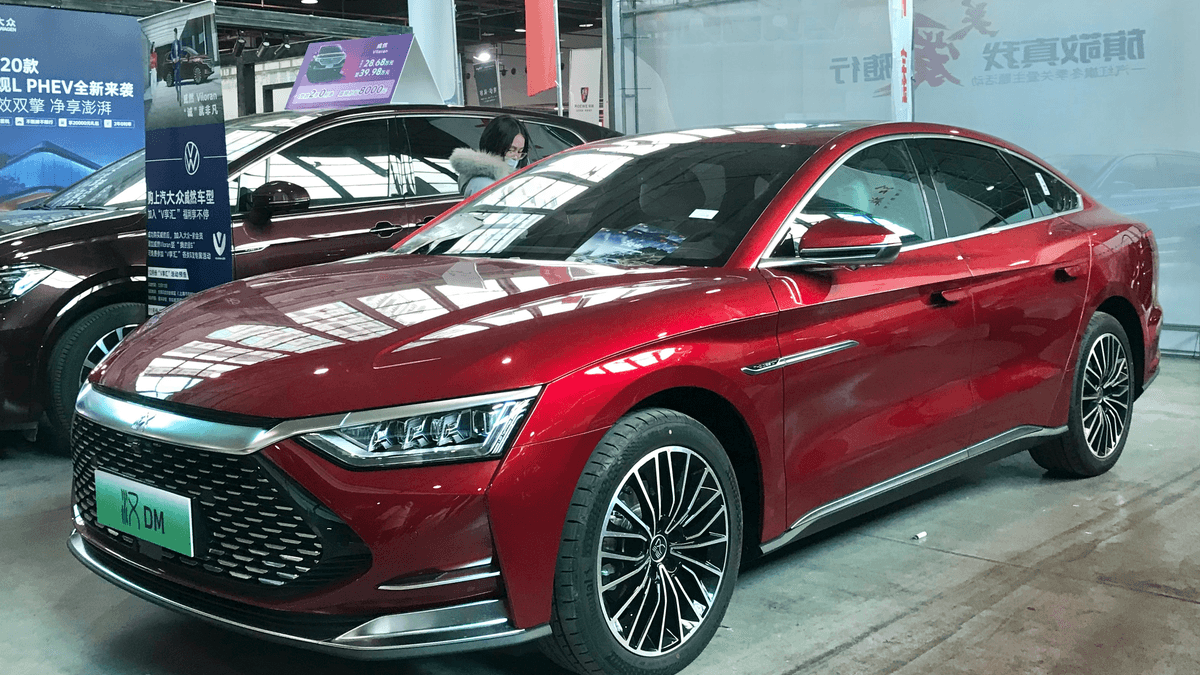
The European Union will restrict imports of new hybrid passenger cars from several non-EU countries from 1 December 2026. The European Commission adopted the implementing regulation on 23 November and published it in the Official Journal on Tuesday. The provisional safeguard lasts for 200 days, ending on 18 June 2027. Once the relevant quota is exhausted, the goods concerned cannot be imported. Paying an additional tariff does not provide a route above that limit.
The measure does not target Chinese manufacturers alone. It follows the vehicle's customs origin and can therefore affect models bearing European brands if they originate in a covered non-EU country. Cars already manufactured within the EU do not count against these import quotas.
How the quotas work
The regulation covers new vehicles designed to carry no more than nine people including the driver, using both a combustion engine and at least one electric motor for propulsion. Whether their batteries can be charged externally is immaterial. Full hybrids, plug-in hybrids and mild hybrids with electric propulsion assistance are covered. Pure battery-electric cars and used vehicles are outside these particular import limits.
China has an initial allowance of 86,301 vehicles from 1 December to 28 February. Japan receives 76,900, Türkiye 56,844, the United Kingdom 47,431 and the United States 8,317. South Korea, Mexico, Morocco and Serbia also have individual allocations. Other origins that are not exempt share a residual quota.
The second period runs from 1 March to 31 May 2027 and the third from 1 to 18 June. China's allocation across all three periods totals 191,780 vehicles. Unused amounts can be carried into the following period. Imports within the available quotas remain subject to the normal customs duties or applicable preferential tariff rates.
For goods of Chinese origin, Article 5 also requires an export quota certificate from China's chamber of commerce for machinery and electronic products. EU customs authorities will therefore need to consider the required origin and quota documentation as well as the classification of the goods.
Iceland, Liechtenstein, Norway, Ukraine, Kenya and other developing countries listed in the regulation are exempt. A separate exemption applies to certain vehicles moved from Great Britain into Northern Ireland, sold there to final consumers and registered for use there.
Why Brussels is intervening now
The Commission opened its investigation on 30 October. Its provisional assessment identifies a threat of serious injury to European industry arising from increasing imports. This is not a final finding that such injury has already occurred.
The Commission used imports in 2025 as its starting point for the country-specific quotas, adding slightly more than 15 percent. Countries accounting for more than two percent of imports in that reference year received individual allocations. The approach therefore allows growth relative to 2025 while restricting deliveries that have since increased far beyond that level.
China is particularly affected. According to Reuters, the Chinese limit, expressed as an annual equivalent, is about 350,000 vehicles, substantially below the shipments expected in 2026. The measure follows an understanding reached between Brussels and Beijing in October. China's commerce ministry called on the EU to respect that understanding and reserved its options to protect its industry's interests. Britain's motor industry association SMMT meanwhile expressed concern about closely integrated supply chains with the EU.
Whether the EU adopts safeguards extending beyond June 2027 depends on the outcome of the continuing investigation. For importers, however, the December change is already clear: both the applicable customs duty and the amount remaining in the relevant quota will determine whether a shipment can enter.
Key facts
- The regulation applies from 1 December 2026 for 200 days.
- China's total allowance across three periods is 191,780 vehicles.
- Imports above the quotas are prohibited; otherwise applicable customs duties remain payable within them.
- The investigation continues; a definitive safeguard has not yet been decided.