The Council of the European Union wants retailers to have four months after an energy label is rescaled to sell products bearing the old label in ordinary cases. The European Commission had proposed twelve months. The Council set out its negotiating position on November 6, 2026, with a longer period for certain remaining stock. The proposal also changes the product information that appliance and tyre suppliers would pass to retailers, consumers and regulators.
Key facts
- The Council proposes a four-month period after the rescaling date for ordinary sales with the old energy label.
- The Council proposes twelve months for certain models no longer placed on the market after that date and when a supplier ceases trading.
- The Commission would make greater use of the EU product register, EPREL. Suppliers would pass on the QR code and registration number along the supply chain.
- The Council position leaves the rules in force. Negotiations can begin once the European Parliament has set its position.
Why the change matters for stock still on sale
Rescaling shifts the thresholds between efficiency classes for a product group. When many models occupy the highest class, consumers have a harder time telling them apart within that class. A new scale restores room between the grades. An appliance can receive a different letter after the switch even though its technology and electricity consumption have stayed the same.
Under Article 11(13) of the energy labelling regulation, suppliers generally provide dealers with both the existing and rescaled labels during the four months before the switch. For older units, suppliers must provide the new label on request. Retailers replace labels on products displayed in shops and online within 14 working days after the switch. In some circumstances they can sell units with the old label for up to nine months, for example when the supplier has ceased trading and a new label is unavailable.
| Policy stage | Period from the rescaling date | What the period covers |
|---|---|---|
| Existing framework | 14 working days | Replacement of labels on display in ordinary cases |
| Commission proposal of June 2026 | 12 months | Sale of products bearing the old label |
| Council position of November 6, 2026 | 4 months | Sale with the old label in ordinary cases |
The four months in the Council mandate start after the switch. The four months in the existing framework refer to the earlier period when suppliers generally provide both labels. The Council favours a longer period for certain remaining stock. It would allow the twelve months to be extended for certain product groups to prevent serviceable goods from being discarded. For a retailer, the time available to sell a unit would therefore also depend on whether the supplier keeps placing the model on the market or has ceased trading.
For shoppers, the model identifier ties the unit in a shop or an online listing to the correct data record. During a changeover two scales may be visible at the same time. The letter alone can then be misleading in a comparison unless it is read together with the scale it belongs to.
What information would travel with the product
The Commission proposal builds on the European Product Registry for Energy Labelling, or EPREL. Suppliers register models there and enter the information the database uses to generate labels. Under the proposal, they would no longer upload a separate label image. They would pass on the QR code and registration number along the supply chain. That would help a retailer match a specific model to the right record, including when a printed label has not been supplied with each unit.
The Commission would allow the format of the accompanying energy label to vary by product group. Printed labels would remain available on request. The European Parliament's summary distinguishes product information sheets, for which the proposal would remove dealers' option to request a paper copy. That duty differs from displaying the label at the point of purchase. A digital product sheet gives access to technical information, while the shopper should still be able to see the efficiency information when considering an offer.
The Commission also envisages a link with the planned digital product passport. Where EPREL already holds equivalent information, companies would avoid entering the same model data again for authorities. The proposal distinguishes information about a model from additional information about individual units. Test reports for tyres would go into the restricted part of the register. Market surveillance authorities could then access them without making all of the test documentation visible in the public product record.
What could change for tyres
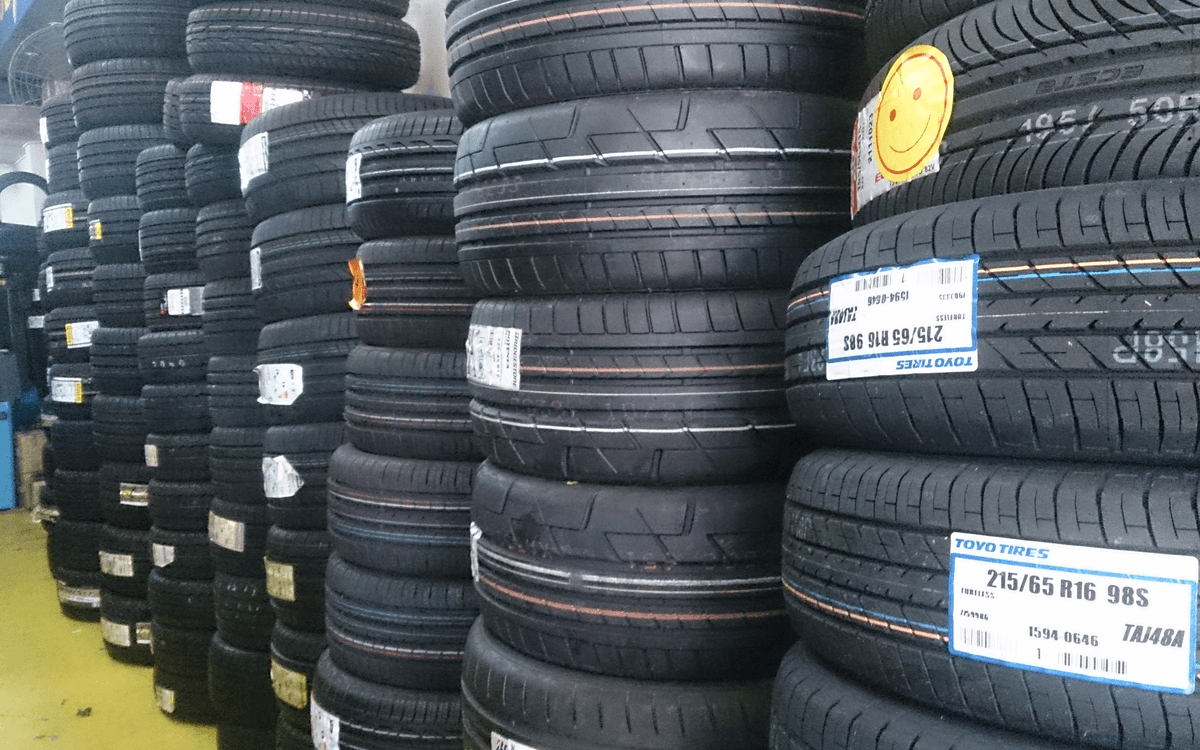
For tyres, the Council position also addresses how information on fuel efficiency, wet grip and external rolling noise appears in advertisements, catalogues and online sales. The Council wants to consolidate suppliers' and distributors' obligations for commercial communications and clarify what information should appear on invoices and delivery notes. The rules therefore reach beyond the label attached to a tyre in a shop.
The Council would allow the Commission to adjust class thresholds when, for example, advances in technology leave many tyre models concentrated in only a few classes. It calls for an impact assessment and consultation before rescaling. The relationship between the performance measures would have to be considered in setting the thresholds. The next move lies with the European Parliament. Once it has a position, the Council presidency can negotiate a joint text. The Council proposes a twelve-month lead time before several provisions apply. Its negotiating position sets no specific date for relabelling a product group.