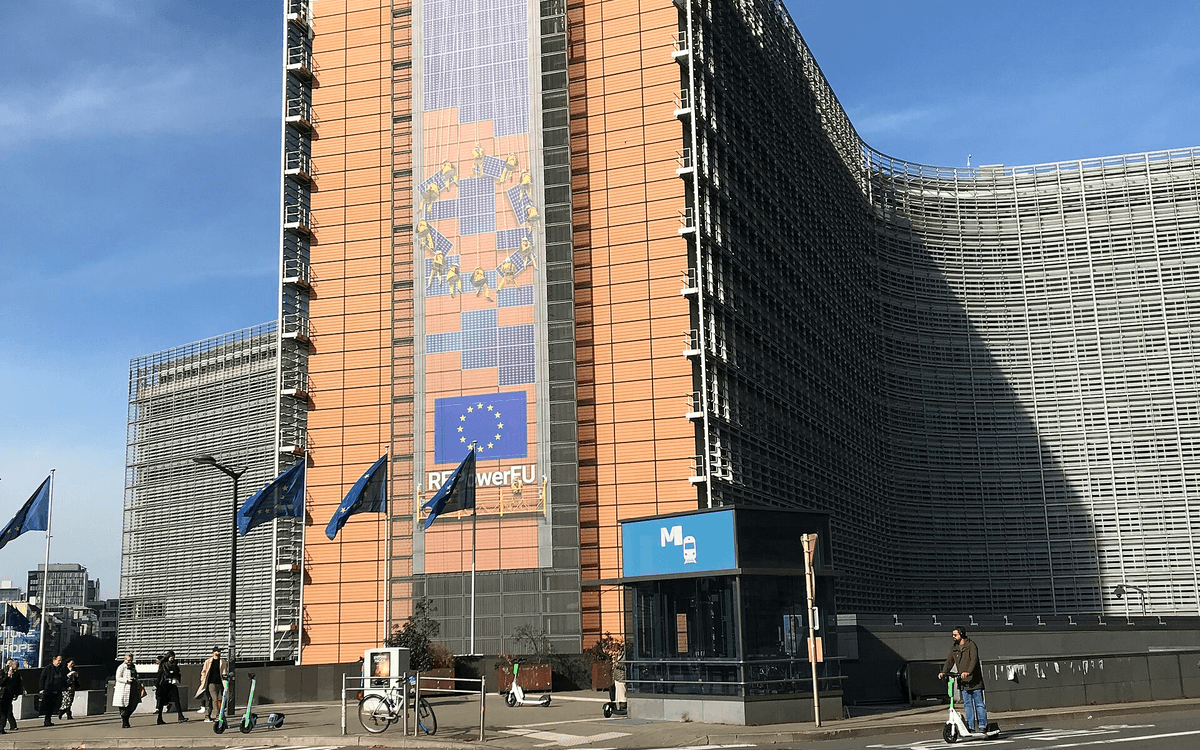
The European Commission adopted its 2027 work programme on 4 November 2026, setting out proposals on raw materials, banking, housing and defence. The adopted document establishes an agenda for future action, rather than bringing every listed measure into law. Commission announcement
COM(2026) 710 sets a 2027 agenda for raw materials and banking
Key facts
- The programme proposes a European Corporation on Critical Raw Materials.
- Planned financial measures include a bank competitiveness and simplification package.
- A housing simplification package would seek to ease building and renovation.
- The Commission calls for political agreement on the 2028-2034 EU budget framework by the end of 2026.
The main communication, COM(2026) 710 final, presents economic independence as a response to changing trade, energy and security conditions. It identifies raw materials needed for sectors including electric vehicles, chips, batteries and defence. The proposed corporation would work with the Critical Raw Materials Centre. The programme does not by itself demonstrate that the corporation is operating or supplying manufacturers.
On finance, the Commission plans further proposals for the Savings and Investments Union, including venture-capital framework reform, and a mid-term review of that project. The bank package is part of this agenda. Our briefing on European financial integration and risk sharing explains the separate institutional debate about cross-border financing. The ECB speech discussed there does not constitute endorsement or adoption of this Commission programme.
Simplification also extends to national implementation. The communication describes a proposed pact against gold-plating, meaning additional national requirements when EU rules are transposed. Member states would be expected to disclose additions and their effects on businesses and the single market. The programme envisages a review-and-removal mechanism through the European Semester; that intention should not be treated as an already completed removal of national rules.
The Commission says twelve omnibus packages and other simplification initiatives presented during its mandate could generate €22.3 billion in recurring annual administrative savings once fully implemented. This is potential attributed to the Commission, conditional on implementation. It is not evidence that businesses have already saved that amount. Main communication and publication record
Housing, Ukraine cooperation and the 2028-2034 budget timetable
The planned housing package aims to increase supply by reducing administrative obstacles to building and renovation. The programme links it to the EU's Affordable Housing Plan. It supplies a policy direction, not a verified number of completed homes, a new individual grant award or a change already applicable to every construction project.
In defence, the Commission intends to implement the EU-Ukraine Defence Industrial Pact and develop cooperation on air defence. A proposed European Instrument for Strategic Enablers would concern support capabilities such as strategic transport, air-to-air refuelling, space and cyber defence. A prospective European Security Emergency Protocol would support a common response when member states face a direct, credible threat. These are planned instruments and implementation commitments, not confirmation that all capabilities have been delivered.
The programme's budget passage asks for political agreement on the 2028-2034 Multiannual Financial Framework by the end of 2026. It envisages work with Parliament, the Council and member states on sectoral legislation and preparations during 2027, so funds can begin flowing on 1 January 2028. The communication calls for agreement; it does not announce that negotiations are complete.
Institutional stages remain important across this agenda. Our report on the Commission's tourism strategy shows how an announced strategy sets out tools requiring subsequent implementation. The same distinction separates adoption of a work programme from passage of its individual legislative proposals.
The next developments are those separate proposals, negotiations and implementation steps. Detailed annex schedules and the separate annual simplification report are outside the documents examined for this article. Our Brussels section will follow the resulting decisions rather than assume the entire agenda has already taken effect.