The African Union and the European Union adopted a partnership implementation plan in Addis Ababa on 4 November 2026. According to the joint co-chairs' statement, senior officials also adopted a mechanism to follow up agreed measures. The step concerns the organisation and oversight of cooperation, rather than the announcement of a new blanket funding commitment.
AU and EU adopt implementation plan after the Luanda summit
Key facts
- The meeting took place in Addis Ababa on 4 November.
- The adopted plan covers four agreed priority areas.
- A new follow-up mechanism is intended to strengthen coordination, progress monitoring and accountability.
- A joint monitoring report covering 2022 to 2025 was also released.
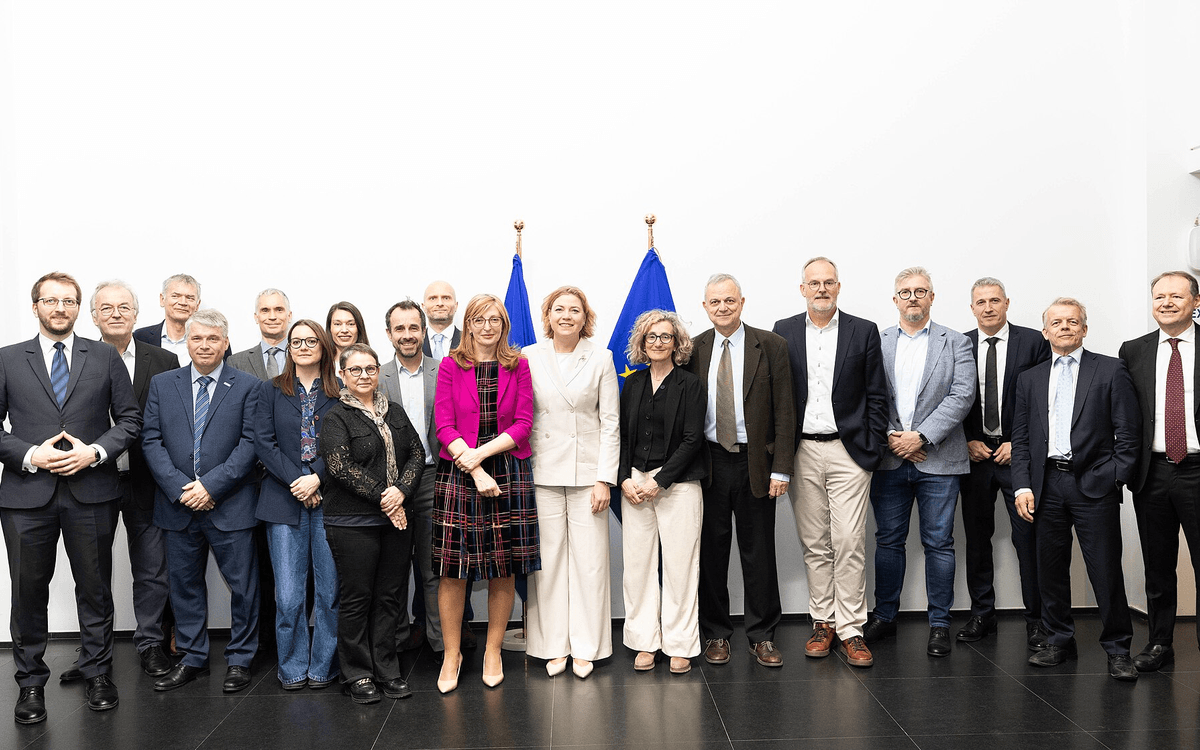
The senior officials' meeting follows the seventh AU-EU summit, held in Luanda in November 2025. It was co-chaired by Willy Nyamitwe, chair of the AU Permanent Representatives Committee, and Patricia Llombart Cussac, managing director for Africa at the European External Action Service. The statement therefore describes a joint institutional process involving both sides. Joint account of the meeting
The implementation plan organises cooperation under four areas: prosperity; peace, security and governance; people; and multilateralism. Its purpose is to translate summit commitments into practical measures. Adoption does not, however, establish that every planned initiative has already been implemented or achieved its intended effects.
The accompanying follow-up mechanism is intended to improve institutional coordination and make implementation more accountable. The released monitoring report instead looks back at the period between the sixth and seventh summits. Its publication is a separate outcome of the meeting. Individual findings in that report are not reproduced here as independently verified achievements.
Global Gateway: existing investment framework and new oversight
Discussions on prosperity covered trade, economic integration and sustainable value chains. The two sides considered existing support for the African Continental Free Trade Area, or AfCFTA, alongside infrastructure, transport, energy, digital transformation, health and education. Reducing investment risks also featured on the agenda. The statement identifies these topics but supplies no new complete list of individually financed projects. Co-chairs' statement
For context, it points to the Global Gateway Africa-Europe investment package. The Commission describes implementation through Team Europe initiatives: the EU, member states and European financial institutions work on jointly identified projects. The €150 billion figure shown on that page belongs to the existing investment framework. It should not be presented as an amount newly approved on 4 November or already fully disbursed.
The Commission overview identifies submarine and terrestrial fibre-optic cables, cloud and data infrastructure, and regulatory frameworks as elements of digital cooperation. Transport projects focus on cross-border corridors and connections between African and European networks. These existing fields explain the institutional context; listing them does not establish that new contracts were awarded on the meeting date.
The relevant institutional question is how cross-border financing is organised and scrutinised. Our background article on European integration and risk sharing explains that question in the setting of Europe's financial markets. The AU-EU initiative has a different geographic and political framework; the ECB speech discussed there is neither its legal basis nor evidence that it works.
Participants reaffirmed regular political dialogue and closer coordination in multilateral forums. They also considered peace and security, migration and mobility, United Nations reform and global digital rules. The statement read for this article provides no specific date for the next meeting or a first new progress assessment. In our Brussels section, the relevant next development is therefore further EU institutional work on implementation and oversight, while individual project results require separate evidence.