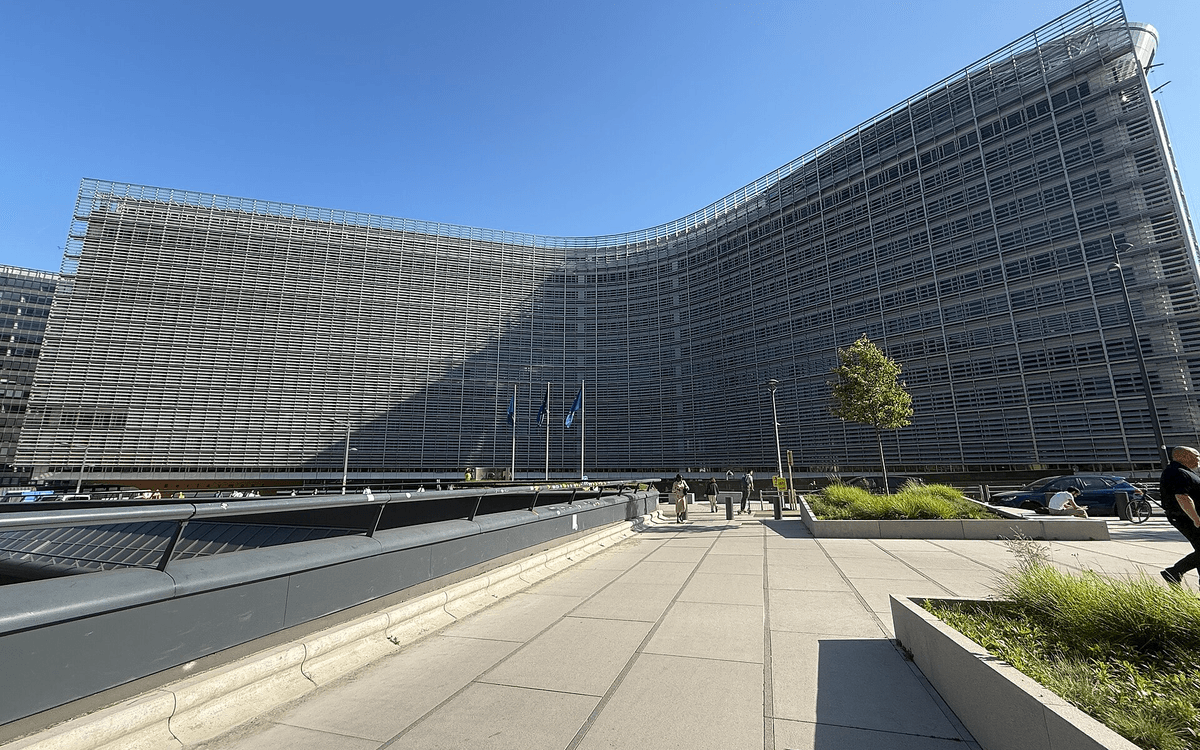
On 19 November 2026, the European Commission formally pressed France, Luxembourg and Austria to complete the national implementation of the European Union's revised electricity-market rules. The three countries received reasoned opinions in infringement proceedings. Those are a further enforcement step, not Court of Justice judgments or fines already imposed. According to the Commission, the governments have two months to respond and take the necessary measures. The dispute illustrates a fundamental gap between an EU reform being adopted and households across Europe having equivalent, enforceable contract protections.
Key facts
- On 19 November 2026, the Commission issued reasoned opinions to France, Luxembourg and Austria over what it regards as incomplete transposition of Directive (EU) 2024/1711.
- The general deadline to transpose the directive was 17 January 2025, while specific provisions on supplier choice and energy sharing had an extended deadline of 17 July 2026.
- The Commission sent initial formal notices to 26 member states in March 2025. Its latest decisions follow a review of responses and national measures notified by the three countries.
- The governments now have two months to address the concerns. The Commission could subsequently refer the cases to the EU court and request financial penalties; no such judicial ruling has been made in these cases.
What consumers stand to gain from the rules
Directive 2024/1711 forms part of the EU response to the electricity-price crisis that became acute in 2022. Its purpose is not simply to announce lower bills. It changes the legal framework through which suppliers offer contracts, customers participate in electricity markets and vulnerable consumers receive safeguards. The hope is that cheaper renewable generation, stronger competition and more predictable contracts can ultimately benefit households and businesses. That mechanism depends on how the legislation is implemented and enforced.
Fixed-term, fixed-price contracts are one practical example. Customers need to understand what is fixed, for how long and under which conditions. A fixed price for the energy component does not necessarily mean every item on an electricity bill is frozen. The reform broadens the framework for contract choice and requires consumer protections to accompany the products offered. It does not impose one common electricity tariff throughout the EU, nor does it guarantee that all consumers' total bills will fall in the same month.
Energy sharing and the concept of an active customer form another part of the design. A household or business might generate some electricity, participate in local arrangements or use a service structured differently from traditional supply. Definitions matter because regulators, suppliers and courts need to know which participants qualify and how their rights operate. Without sufficiently clear national provisions, a right described in European legislation can become more difficult to exercise consistently on the ground.
The Commission's November notice identifies distinct remaining issues in each country. In France, it cites gaps involving definitions of active customers, energy sharing, fixed-term fixed-price contracts and energy poverty. These are examples of the Commission's concerns, not proof that every form of energy sharing is prohibited in France. A missing or disputed statutory definition can affect how downstream rights are interpreted even where related activity already takes place.
In Luxembourg, the Commission points, among other issues, to fixed-term, fixed-price supply contracts and the associated consumer protections, as well as safeguards against disconnection for vulnerable and energy-poor customers. For Austria, the most prominent outstanding concerns relate to protection against disconnections, especially for people who are vulnerable or experiencing energy poverty. The practical point is not that the Commission is setting retail prices from Brussels. It is testing whether the national legal framework provides the protections agreed at EU level.
Why a law passed in Brussels may still be incomplete at home
The distinction between a directive and a regulation is crucial. The electricity reform was adopted at EU level in 2024 and Directive 2024/1711 is in force as European law. However, directives generally require member states to translate the required legal outcomes into their own national laws. They differ in that respect from EU regulations, which are directly applicable under their own terms. Consequently, the timing and completeness of domestic implementation can vary, even after EU legislators have settled the overall reform.
Most provisions were supposed to have been transposed by 17 January 2025. Particular measures on the free choice of supplier and energy sharing had more time, until 17 July 2026. It would therefore be inaccurate to label every provision outstanding in January 2025 as overdue from that date without checking the specific deadline. Nor is the existence of an infringement proceeding itself proof that households in any of the countries have suffered a quantifiable loss. The Commission has identified what it regards as failures to fulfil legal obligations; a court has not yet decided these cases.
Infringement enforcement follows a sequence. A letter of formal notice is the opening stage in which the Commission invites a member state to explain or correct an alleged shortcoming. A reasoned opinion is the more formal next step, spelling out the legal concern and providing a period for compliance. A referral to the Court of Justice can follow if the Commission remains dissatisfied. In these cases, the Commission says that such a referral could include a request for financial sanctions. That is a possibility in the next phase, not a sanction that took effect on 19 November.
The Commission says 26 countries were sent formal notices in March 2025. The present decisions focus on three governments whose responses and notified national provisions were examined and found insufficient by the Commission. The announcement should not be used to infer that all other countries are definitely fully compliant, or that all three have identical gaps. The issues identified, and the legal effects of any national corrections, are country-specific.
The next test is national legislation, not a headline
Nothing in the Commission's announcement automatically rewrites a household's existing energy contract that evening. Which protections apply to a particular customer depends on the national rules in force, the relevant contract and any future amendments. The Commission's action is nevertheless meaningful: it sets another two-month enforcement window for governments to bring domestic provisions into line with the directive's requirements.
The next concrete evidence will be the responses and any legislative measures from France, Luxembourg and Austria, followed by the Commission's assessment of whether the shortcomings have been resolved. A later court referral is possible but not predetermined. Any financial sanctions would depend on further legal steps. The broader question for the European electricity reform is now implementation: whether the protections that politicians agreed in Brussels are sufficiently precise to be used by consumers, suppliers and regulators in each national market.